8 Cities To Visit In Japan
Japan is one of those special countries that even with thorough exploration, always leaves you wanting more. Each city either shyly or boldly shares its personality, the countryside is bountiful in its beauty, and the people are warm. From the dazzling neon hues of Tokyo, to the steaming jewel-coloured pools in Beppu, to the haunting sorrow of Hiroshima's history, Japan wears many faces across its small mass.
To truly experience Japan, you need to journey beyond the itinerary regulars of Tokyo, Osaka, and Kyoto. These hotspots are still must-dos, but don't you dare leave until you've explored at least one other.
I spent four winter weeks in Japan exploring these eight cities. This list does not include skiing/snowboarding hubs - if you'd like a Japanese snow holiday itinerary, then click here.
Nikko
Nikko is a lush, forested oasis settled two hours north of Tokyo. It's quiet and peaceful - red and gold temples stand stoically between thickets of old-growth cedar trees. It's a small city heavily influenced in its architecture by the Edo Period. Explore the historic shrines, bridges, and traditional gardens that are speckled throughout the region.
Once you've admired the architecture, take a short walk beyond the quiet suburban lanes to walk through silent national forests, watch the river stream over smoothed boulders, and follow the Jizo Buddhas as they solemnly guard the Kanmangafuchi Abyss.
If you stay a few nights, you'll have time to make day trips to Kinugawa-Onsen and Lake Chuzenji. We stayed in Kinugawa-Onsen for an even quieter experience, and easily travelled daily into Nikko by the local train. Lake Chuzenji is worth the visit to take pictures of Kegon Falls and the surrounding lake. It's colder in Lake Chuzenji than Nikko, so be sure to dress warmly if you're visiting in winter.


Aizuwakamatsu
For samurai training grounds and preserved Edo period history, visit Aizuwakamatsu, situated in the Fukushima Prefecture about 3 hours north of Nikko. Explore the Tsuraga-jo Castle and its impenetrable white walls, the traditional samurai residence and museum, and Mt Iimori for a complete historical tour.
Aizuwakamatsu is spread flat, bordered by Mt Iimori to one side. We walked everywhere, thinking, we're young and fit, walking will be no big deal. It was a moderate deal. Take good walking shoes to Aizuwakamatsu and anticipate that the historical hotspots are spread by more distance than it seems. I'd also recommend packing some snacks in your bag, as we struggled to find places to eat within the suburbs.
Also, double-check whether the Aizu Bukeyashiki (the samurai residence and museum) is open... unfortunately, we walked all the way there to discover it was closed that week for maintenance. Big rookie mistake.
Mt Iimori feels ancient and heavy. It's a place that demands great respect and honour, as the staircases and trails lead you through dense damp forest spotted with the burial sites of fallen samurai. Visit the rare Sazaedo Pagoda at the base of the hill first to marvel at one of the only completely wooden double helix structures in the world.


Tokyo
If it's your first time in Japan, I'd recommend exploring Tokyo for at least three full days before moving on. It's a tremendously large city (obviously), with seemingly endless things to do, but in three to four days you'll get a good taste without spending your entire holiday in one city.
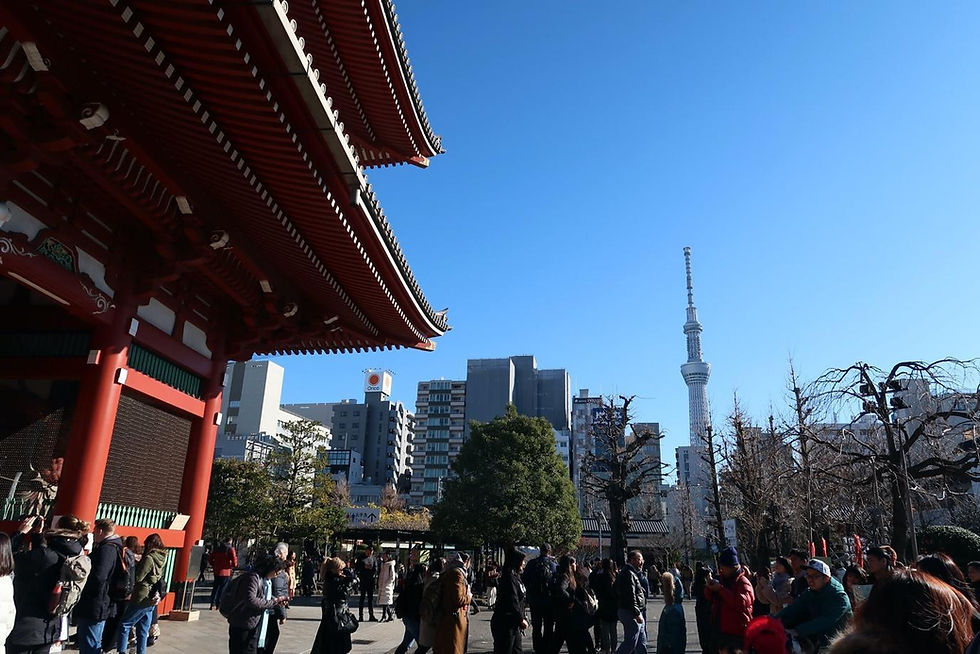
Most travellers choose to stay in Shinjuku for the nightlife and accessibility that it offers. If you're like me and prefer to stay away from dense tourist crowds, then Shinjuku isn't for you. Great to visit during the day (once) but you wouldn't catch me sleeping there. I'd recommend staying in Asakusa or Ueno for a quieter and cleaner experience. Everything remains super accessible by train and in Asakusa, you'll be able to wander down to Senso-ji temple and the markets that preside it. If you want a fun nightlife vibe that isn't Shinjuku, choose to stay in either Shibuya or Shin-Okubo (Tokyo's Koreatown).
A classic list of Tokyo must-dos:
Tokyo Skytree (maybe you'll spot Mt Fuji in the distance)
Senso-ji Temple and Asakusa markets
Shop and eat through Harajuku
Walk the perimeter of the Imperial Palace
Visit the Meiji Shrine
teamLab Borderless art exhibit
Visit Akihabara, the tech district
Cross the Shibuya scramble
Visit Tokyo Tower
Tokyo Metropolitan Government Building for excellent views (completely free!)
Here's a fun to-do list I made for my sister when she realised she had too much time in Tokyo to kill. Perhaps you'll find some inspiration here beyond the regular tourist sites.
Buy three different matcha and rate them best to worst
Visit the Tokyo aquarium
Find a Christmas tree ornament to bring home
Try to find the Nintendo store in Shibuya without referring to the shopping centre map
Catch the Tokyo train loop and get off at a random stop - explore the ward without any expectations. How is it different to where you're staying?
Explore the Daikanyama T-site Tsutaya bookstore in Shibuya
Pick one of the major train stations, go there, and spend the afternoon only exploring the world of its underground station.
Explore Studio Records in Shibuya
Try and win a Kirby (or another plush) in an arcade machine. Five attempts only before you have to move on to a new machine.
Buy a weird pair of sunglasses at a Don Quijote

Hiroshima
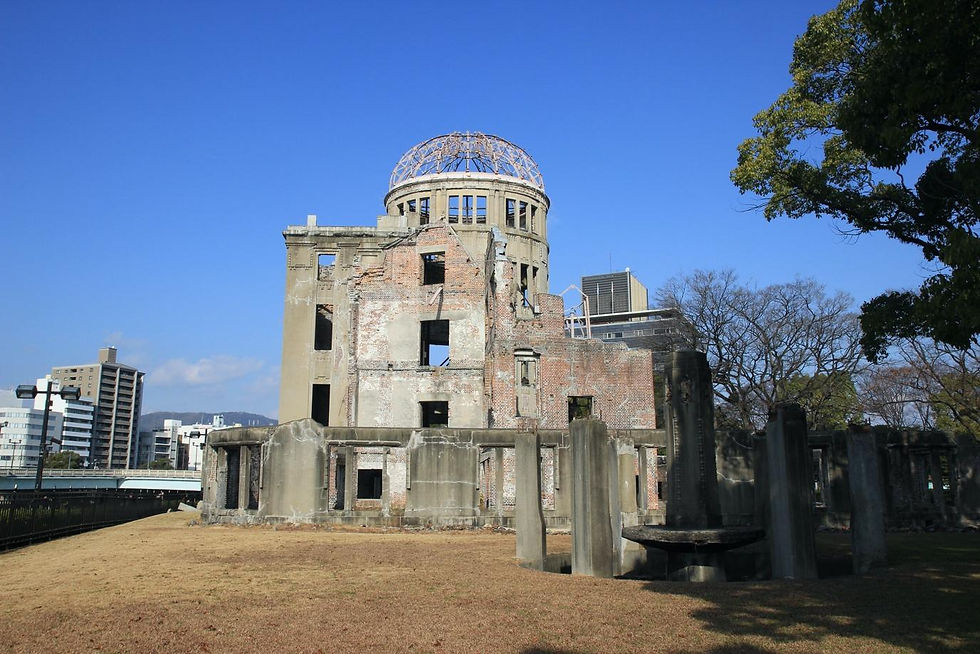
Hiroshima took me by surprise. I anticipated that its history continues to frame its present identity. Truthfully, this city is an expert case study on continued life after tragedy, while forever honouring the tragedy.
Visiting the A-Bomb Dome, the Hiroshima Peace Memorial Museum, and the Peace Memorial Park is heavy. But it's necessary. It delivers its exact intent: a yearning for peace in whichever corner of the world you hail from, and for that to extend across the globe. You must visit these sites, but prescribe an entire day for it. We walked through Shukkeien Garden, a historic traditional garden, afterward on our way back to the hotel, and that was about all I could handle after such a heavy day. Hiroshima Castle is another site to explore, built around the same time as Shukkeien Garden.
Hiroshima in the 21st century is alive with a bustling shopping and nightlife scene. This one of the only cities where we struggled to find a meal because we hadn't booked a reservation ahead of time. While in Hiroshima, eat okonomiyaki!
We spent two full days in Hiroshima, and the latter day we journeyed to Miyajima Island for a day trip. It's a train and ferry ride away, but it's a stunning natural reserve with a semi-steep hike leading you to summit Mt Misen, where you'll be rewarded with incredible views of Hiroshima Bay.

Beppu
Beppu is a quirky seaside city in the Oita Prefecture on Japan's southern island of Kyushu. It's easily accessibly via Shinkansen from the main island of Honshu, though it will require a fair day of travel from Hiroshima.
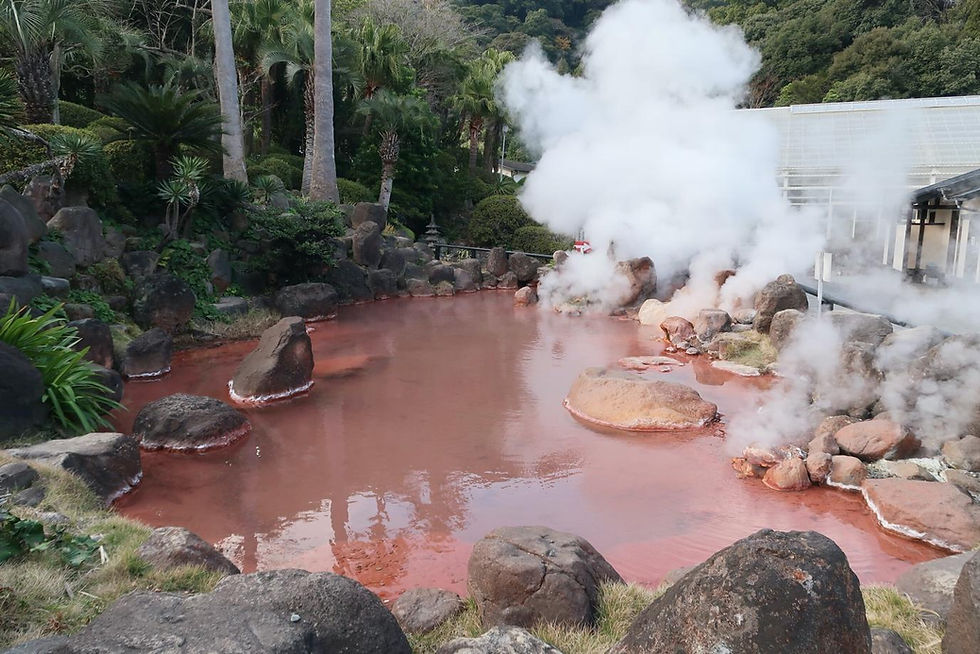
Beppu smells. Like eggs. Personally, (weirdly?), I sort of like it. Especially when you're fronted with the source of the smells - boiling hot springs in rich colours and textures that are almost siren-like in their ability to pull you forward because, just a touch... (don't touch). Pools the colour of caramelised oranges, freshly plucked tea leaves, and glacier ice make for stunning photographs. There are eight thermal springs to form a hot spring trail which make for a good day - nevermind the fact that it's called the Hells of Beppu.
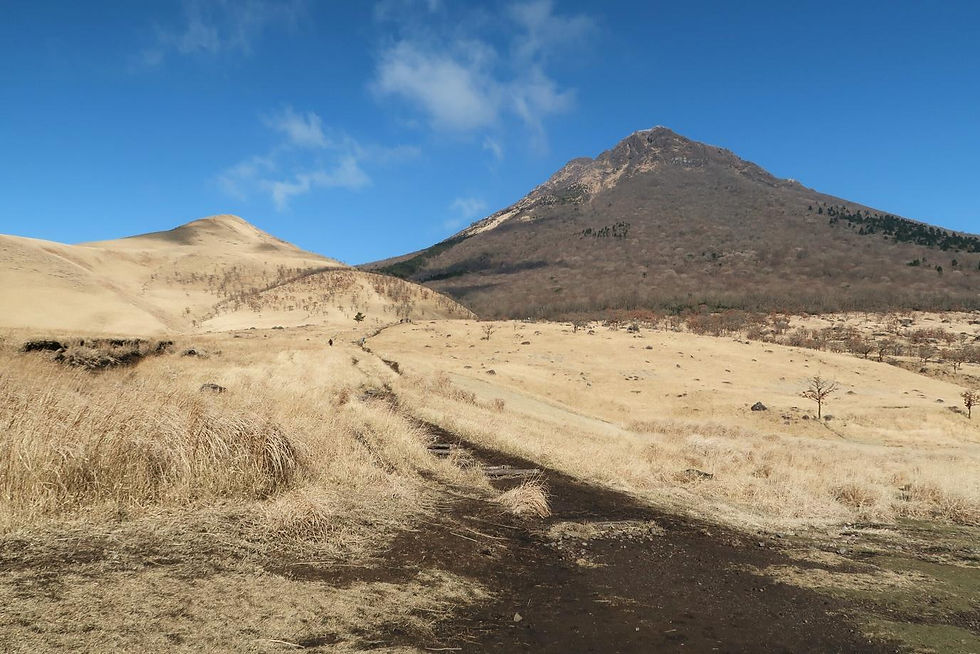
Beppu is the perfect place to try a traditional onsen experience. Get naked and get amongst it. If you spend a few nights in Beppu, you could also pull a day trip to one of the surrounding volcanic hikes in the region. We journeyed to the town of Yufuin, a picturesque tourist town set against the base of Mt Yufu, a dormant volcano that we spent the day hiking. The landscape here is really different to the scenes on the main island, and we found its ruggedness and tall grasses very cinematic.
Fukuoka
We stopped briefly in Fukuoka, Kyushu's largest city sat prettily on the island's western edge overlooking Hakata Bay. Naka River runs through the middle of the city, surprisingly abundant with wildlife to complement the various green spaces preserved around the city.
Fukuoka offers a sense of what regular lived life is for the urban Japanese - it's not heavily tourist-y, it's rather business-like, but it's not boring. At least, not for a passing visit. We explored Ohori Park and Maizuru Park, home to the Fukuoka Castle ruins. At night, the park is lit up in soft displays thanks to teamLabs.

Kyoto
Kyoto was Japan's capital city before Tokyo's sprawl took over. Kyoto's flat skyline, bicycle-lined streets, and Edo period temples and shrines do make you feel you've stepped back in time to traditional Japan.
The major tourist hot-spots include the Golden Pavilion, the Arashiyama Bamboo Forest, and the Red Gates. Word of advice: arrive to each of these sites early in the day before the crowds filter in. The crowds will ruin those beautiful photos you're trying to take.
Kyoto's real magic lies in the quiet suburban streets and alleys that more often than not, lead you to a secret and silent temple. Enjoy the lush gardens, the lack of neon signs, and imagine what life would have been like centuries ago.


Osaka
Osaka is Japan's second largest city after Tokyo, and it's a-buzz with an insanely delicious foodie scene. Visit Dottonbori for more restaurants and street food carts and dessert stalls than you can count, and make it a mission to try as many different dishes as you can. Osaka comes alive at night with a prominent after-dark scene, and this is the best time to explore Dottonbori.
If you have multiple days in Osaka, it's worth catching the local train to Nara. You've probably heard of Nara's abundance of wild deer - it makes for a fun and cute day.


![[Urban List Archives] Your Guide to the Ultimate Summer of Wellness in Brisbane](https://static.wixstatic.com/media/39600d_a3074e472a914d2ca8dbbb79db678bb5~mv2.jpg/v1/fill/w_980,h_784,al_c,q_85,usm_0.66_1.00_0.01,enc_avif,quality_auto/39600d_a3074e472a914d2ca8dbbb79db678bb5~mv2.jpg)

Comments